






I was running the Gate River Run when I saw a sign that said, “Smile if you peed a little.”
I laughed.


Then I kept running and thought, let us be honest. This is a 15k race. A lot of women probably peed a little.
I know I did.
I peed a little last year when I ran it, before I had surgery for uterine prolapse, muscle weakness, and midline cystocele.
My name is Alina, and this is my story.
The Part No One Prepares You For
After I gave birth to my second baby, something felt off.
My children are close in age. My first was only a year and a half old when I gave birth to my second. Both were vaginal births. Both resulted in second-degree tears.
And like many women, I was stitched up and sent on my way.
There was no real conversation about deep recovery. No one explained what healing should actually look like. No one warned me what could happen if my body did not get the rest and support it needed.
Meanwhile, life did not slow down.
I had a toddler who still needed to be lifted. My baby boy was on the heavier side. I was constantly picking him up, changing diapers, caring for a newborn, and keeping the house running while my own body was still trying to recover.
I was an active mom. Everything fell on me. I did not truly heal.
I just kept going.
When You Know Something Is Not Right
Both of my births were intense. I pushed hard, and I pushed fast. I just wanted my babies out. Both times, I tore.
After my second birth, I could tell something did not feel right. At my postpartum checkup, I asked my gynecologist directly if she saw any prolapse.
She said yes.
Then she said something I will never forget. She told me they typically do not tell women, so they do not worry.
I was stunned.
What do you mean you do not tell women so they do not worry? You are my gynecologist. I trusted you with one of the most vulnerable parts of my body, and you are telling me you would not share something this important with me?
That moment changed everything. I realized I would have to advocate for myself because no one else was going to do it for me.
Learning About Prolapse the Hard Way
Before that moment, I knew nothing about prolapse. It was not something anyone had ever explained to me. It was not part of the conversations I had heard around postpartum recovery.
But once I started researching, I realized how many women quietly live with pelvic floor issues.
You hear the jokes. Women cross their legs when they sneeze. They rush to find a bathroom. They wear a liner just in case. They laugh it off.
Then one day, you realize you are living that life, too.
I breastfed for three years. I was raising two under two. I was exhausted and stretched thin. Like so many moms, I forgot to take care of myself because I was too busy taking care of everyone else.
Over time, the symptoms got worse.
I could not do jumping jacks. I could not work out properly. I could not lift weights the way I used to. If I sneezed, I leaked. If I coughed, I leaked. If I had a cold, I peed my pants constantly.
This was not just inconvenient anymore. It was affecting my quality of life.
Not Every Doctor Is the Same
I started searching for answers, and that is when I learned something that more women need to hear.
A regular gynecologist is not a urogynecologist. And finding a real urogynecologist is not easy.
I saw a regular gynecologist who told me I did not have prolapse. Then I went to a urogynecologist who actually did thorough testing, including leakage testing, and confirmed that yes, I had prolapse.
That validation mattered. It told me I was not imagining it. I was not overreacting. I was dealing with something real.
What Did Not Work for Me
I was fitted for a pessary, which is a device inserted to help support the pelvic organs.
For some women, a pessary can be a great option. For me, it was not.
I felt like it made things worse. It felt uncomfortable inside. It felt like more pressure, not less. It did not help me feel stronger or more supported. It made me feel like things were stretching more.
So, I kept researching.
I joined Facebook groups. I read other women’s experiences. I spent hours trying to understand my options. I even found a well-known urogynecologist in Alpharetta, Georgia. He spent time speaking with me, but the process was cash-only, and there was no guarantee of what insurance would reimburse.
I was determined to keep looking until I found the right doctor.
Finding the Right Doctor
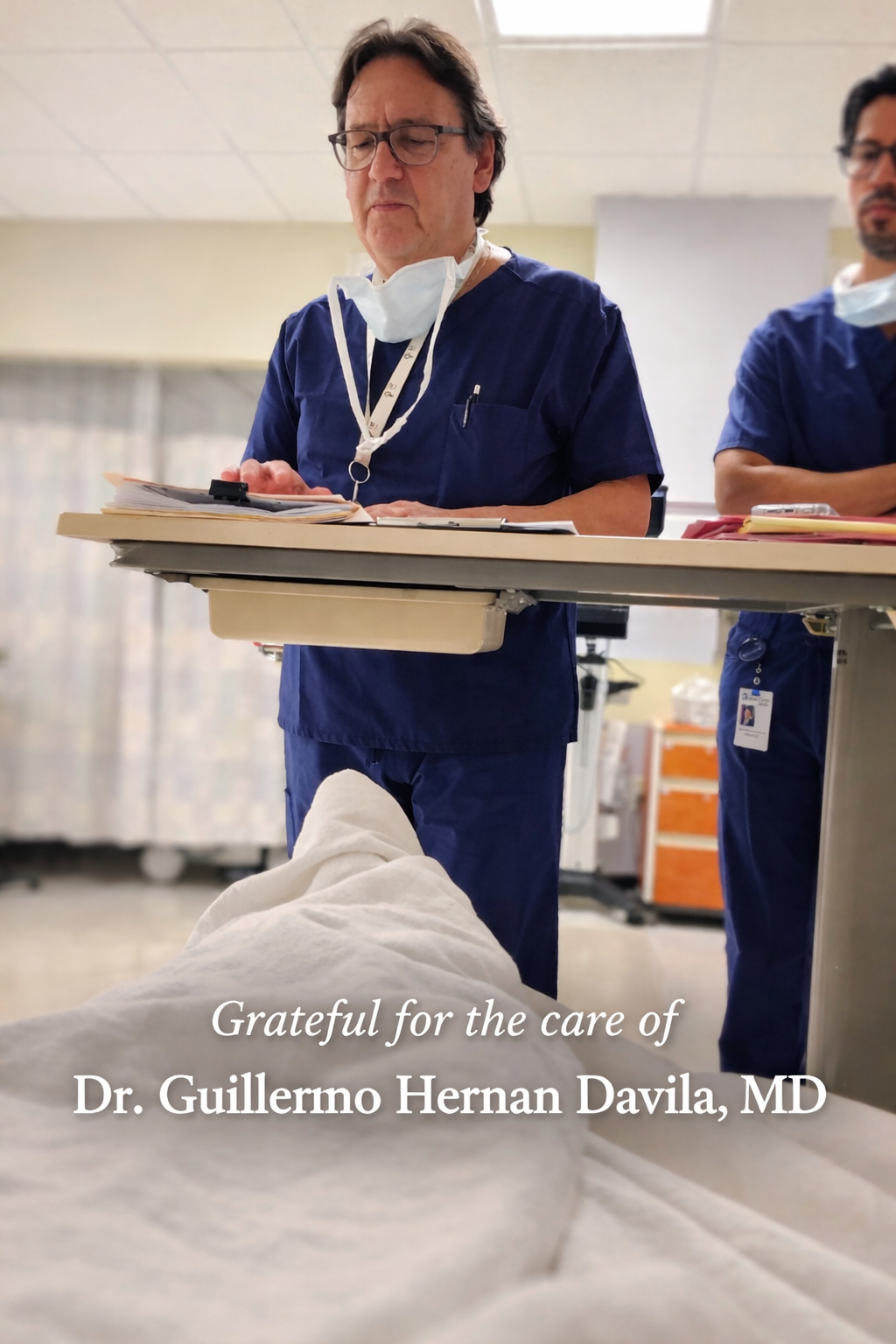
Then I found a highly specialized urogynecologist and reconstructive pelvic surgeon, Dr. Guillermo Hernan Davila, in Fort Lauderdale, Florida.
He listened. He examined me thoroughly. He did not dismiss me. He did not scare me. He simply explained what was happening and told me he could fix it.
He looked at me and basically said to give him 30 minutes, and he would fix me up. And he did.
The Surgery That Changed My Life
I felt incredibly lucky to get an appointment with him. Women travel from all over the world to have surgery with him, and after my experience, I understand why.
He repaired my tissues. He corrected my prolapse. He gave my body back the support it had lost.
It has now been a year since my surgery, and I can honestly say it changed my life.
I laugh, and I do not pee.
I cough, and I do not pee.
I can work out again. I can lift weights again. I can run again. I can live a normal life again.
That kind of freedom is hard to explain unless you have lived without it.
What I Want Other Women to Know
If you take anything from my story, let it be this: Leaking after having kids may be common, but that does not mean it is something you have to just accept.
Prolapse is real. Stress incontinence is real. And too many women are either dismissed, underinformed, or pushed toward solutions that are not right for them.
One doctor in Jacksonville told me that yes, I had prolapse, and when I was ready, they could do a hysterectomy.
But here is what I want women to hear clearly: You do not automatically need a hysterectomy to fix prolapse issues. Absolutely not.
You need information. You need proper testing. You need options. Most of all, you need to advocate for yourself and think very hard before agreeing to a major surgery that may not be necessary for your situation.
Advocate for Yourself
If something feels off in your body, listen to that feeling.
If you are leaking every time you sneeze, cough, run, or jump, do not let anyone tell you that this is just motherhood.
If one doctor dismisses you, get a second opinion.
If a treatment is not working, keep asking questions.
If you need a specialist, find a specialist.
Do your research. Read. Ask. Learn. Keep going until you get real answers.
No woman should have to suffer in silence because someone told her not to worry.