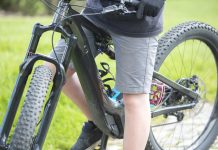





 Electric bikes are quickly becoming the go-to ride for teens across Northeast Florida and beyond. In fact, over 1.1 million “e-bikes” were sold in the U.S. in 2022, according to the American College of Surgeons. But as these speedy two-wheelers gain popularity, the number of crash-related injuries — from brain bleeds to broken bones — is climbing just as fast.
Unlike regular bicycles that rely solely on the rider pedaling to move, e-bikes come equipped with a motor that can boost riders to speeds of up to 28 miles per hour.


“In the last 18 months, and really in the last three or four, we’ve seen a significant increase in both the frequency and severity of children injured because of electric bike or electric scooter accidents,” says John Draus, MD, medical director of the Wolfson Children’s Porter Family Children’s Trauma Center and chief of Pediatric Surgery for Nemours Children’s Health, Jacksonville.
From 2023 to 2024, Wolfson Children’s Hospital saw a massive 222% increase in injuries related to e-bikes and e-scooters. Early data shows that those statistics could double again in 2025.
In fact, when asked about things they’d never let their own kids do for a social media reel, many members of the emergency and trauma teams at Wolfson Children’s Hospital had a clear answer: ride an e-bike or e-scooter.
According to Dr. Draus, the most common e-bike-related injuries that require admission to the hospital include:
- Broken arms or legs
- Facial or skull fractures
- Brain bleeds
“Honestly, it’s scary,” Dr. Draus says. “As a father of two teens, myself, I know this is the thing every parent fears most.”
Three important e-bike safety tips
Whether your child is already zipping around on an e-bike or e-scooter — or you’re thinking about buying one — there are three simple safety rules every parent should encourage their kids to follow:
- Always wear a helmet and other safety gear. But not just any helmet will do — wear one that is specifically designed to withstand the higher speeds of e-bikes and e-scooters. Knee and elbow pads, along with wrist guards, can also help prevent cuts, scrapes, or broken bones.
- Follow the rules of the road. This includes signaling when making a turn and paying close attention to stop signs, speed limits, and traffic patterns.
- Don’t assume that cars can see you. According to Dr. Draus, many collisions between cars and e-bikes happen simply because the driver didn’t see the e-bike rider. While using lights, reflectors, and wearing bright or reflective clothing can help improve visibility, the most important safety measure is riding cautiously and staying alert around vehicles.
Ensure a properly fitted helmet
The most effective tool for preventing head injuries? Wear a helmet that fits properly. Ensure your child’s helmet is properly fitted with the following tips:
- Position the helmet on your child’s head. When they look up, they should see the bottom rim of the helmet. The rim should be one to two finger-widths above the eyebrows.
- The side straps should form a “V” just under each ear. It should fit snug, but not too tightly.
- The helmet should sit level, covering most of the forehead. When tightened, it shouldn’t slide around
- Ask your child to open their mouth wide — like a big yawn. They should feel the helmet tighten snugly against their head. If not, adjust the chin straps so they’re firm (but comfortable), and make sure the buckle sits flat against their skin. The helmet shouldn’t shift if you try to move it.
“Safety starts at home, so parents should model appropriate behavior for their kids,” says Jessica Winberry, prevention coordinator with Safe Kids Northeast Florida, which is led by THE PLAYERS Center for Child Health at Wolfson Children’s Hospital. “Parents can go on rides with their children, making sure they wear their own helmet and reinforce the rules as they go. Make sure your child understands traffic flow, signals and safe speeds.”
Every second counts when an emergency, such as an e-bike or e-scooter crash, occurs. Wolfson Children’s and Baptist Health have Emergency Centers located throughout Northeast Florida to provide care when you and your family need it most. To find the location nearest you, click here. For more injury prevention tips from Safe Kids Northeast Florida, click here.