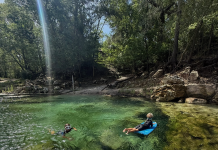






Summer break is officially upon us, and what better way to keep the kids entertained and off screens than at the pool? All the more reason to keep them as safe as possible.


READ: Beat the Heat: Splash Pads, Pools & Water Parks In & Around Jacksonville
According to Jessica Winberry, prevention coordinator for Safe Kids Northeast Florida, which is led by THE PLAYERS Center for Child Health at Wolfson Children’s Hospital, one thing worth noting is what your child wears — as it plays a huge part in their water safety.
The truth about water floaties
Parents of little ones who aren’t yet able to swim often rely on flotation devices to keep their children safe and comfortable in the water. But not all of these products are as helpful — or as safe — as they may seem.
“If a child slips out of their floats or if their water wings pop, they’re at risk for drowning,” Winberry explains. “Additionally, a child who can maneuver successfully with floaties may overestimate their true ability to swim.”
The truth is that children need to be horizontal in order to float or swim, which is where the problem arises: Most of the popular floaties out there keep kids in a vertical position, which they quickly get used to. A good rule of thumb is to use flotation devices that are approved by the U.S. Coast Guard and steer away from items such as water wings, inflatable products, and non-Coast Guard-approved floats.
Also, always be aware of your child and their whereabouts even when they are not actually in the water.
“Drowning often occurs during ‘non-swim’ times,” Winberry adds. “It tends to happen after parents or caregivers have taken children away from the swim area and changed them out of their bathing suits, yet the child finds their way back to the pool and either goes in on their own or falls in.”
READ: Fun In the Sun: Must-Know Water and Sun Safety Tips for Kids
The brighter, the better
From toddlers to teenagers, kids often have strong preferences about what they want to wear. Style-wise, just about anything goes (just don’t forget the sunscreen!), but the color matters. Certain shades are better than others for maximum visibility in the water. Bright and neon shades of orange, yellow, pink, and green tend to be easiest to spot in swimming pools. Colors such as white and light blue are more likely to blend in with the water and be tougher to see.
Also worth noting: While darker-colored swimsuits may be fairly visible in a pool, they could be harder to see in large, open bodies of water such as lakes and oceans.
Supervision is key
While swimsuit colors and what your children are wearing in the pool can be beneficial to overall safety, Winberry cautions that accidents can happen unexpectedly — and even those who are older or stronger swimmers can drown.
For this reason, it is crucial to have layers of protection in place when it comes to water safety, such as:
- Never leaving a child alone or unsupervised around water.
- Using door and/or window alarms to signal if someone exits the home.
- Installing a fence with child locks around home pools.
- Starting swim lessons as early as age 1 and continuing throughout childhood.
- Using only Coast Guard-approved flotation devices.
- Learning CPR.
“No matter where you are with your child, it’s important to have the same layers of protection in place,” Winberry says. “Your home may have all the safety precautions, but you can’t guarantee somewhere else will. Also, children may want to explore a new place, so it’s especially important to watch them vigilantly.”
For more water safety tips from Safe Kids Northeast Florida, which is led by THE PLAYERS Center for Child Health at Wolfson Children’s Hospital, click here.