





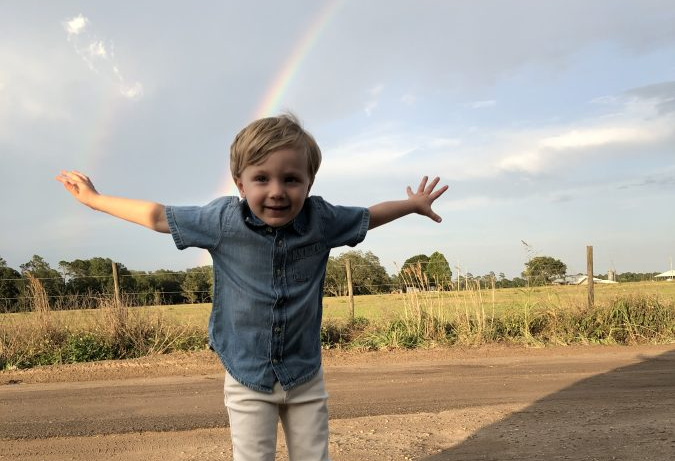
 Think back to a moment when you were struggling: maybe it was a day when everything felt like it was going wrong. Or perhaps it was a moment you were in the store, your kid was screaming like a banshee, your card was getting declined, and a stranger was rolling their eyes. Maybe, because this happens often, it was the day you received news that a family member or friend passed away, leaving this world far too early or unfairly.
Now that you’re in that moment, remember (or imagine) someone near you is trying to help and they say, “I’m so sorry. Everything will be okay,” or “Everything happens for a reason.” How do you feel when you hear that?


For me, and maybe you too, those statements don’t elicit the feelings that the person intended. Instead of feeling seen, loved, or understood, I felt invalidated and pressured to bend my grief into something that looked like fake optimism. If you’ve ever felt that way, you know it can be isolating and can create an environment where you don’t feel safe sharing or expressing your feelings anymore.
READ: Making Room for Grief in Motherhood
Now that you’ve put yourself in that space, imagine you’re a kid (specifically, imagine you’re the age of one of your own kids). You’ve spent all day at school, and you come home, exhausted after the classmate you considered your best friend told you that they didn’t want to be friends anymore. You share your devastation with your Mom, who loves you and has the best intentions, and her response is “aw, it’ll be okay” or “they just aren’t a good friend, you’re better off without them.” How do you feel?
It feels almost like you’re sitting outside in the midst of a storm. And instead of someone simply acknowledging that a rainbow has appeared in the distance, they try to tell you that because there is a rainbow, the storm that’s raging doesn’t matter. They want you to find the silver lining, rooted in the imagery of a cloud’s silver outline that emerges when it is backlit by the sun or moon. It tells you to look beyond the cloud or storm and into the light behind or around it.
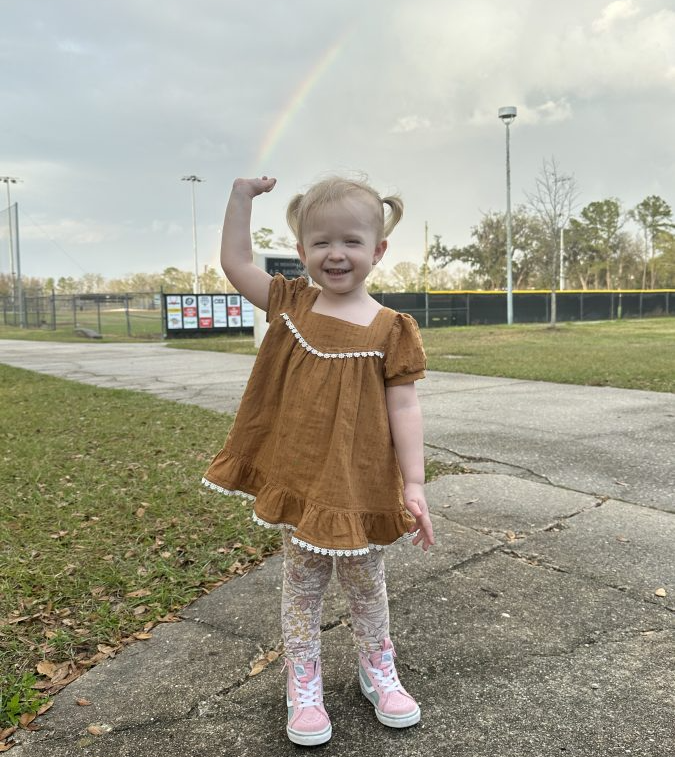 ~Alright, cha-cha slide style, REVERSE~
You’re the Mom. Your kid is the one sharing that exact situation with you. Your gut says, “That kid is just a jerk. Don’t worry about it. You don’t need that kind of friend anyway.”….
Do you remember that feeling of invalidation and loneliness you felt earlier when the roles were reversed? Now that’s how your kid is feeling… and this time, you’re the one doing the invalidating.
YIKES, right?
Let’s switch it up one more time… imagine instead of speaking from your gut, you speak from your head and heart. Instead of “everything will be okay,” you say “Oh, honey, that is so hard. Friendships are such a big part of our lives, and that makes it really painful anytime a friend hurts our feelings”.
How do you think your kid feels in that moment?
Chances are, they feel heard, seen, and they also feel safe sharing their feelings with you. They know that you’re able to relate to them and that their pain is validated by one of the most important people in their life… you.
I know you may be thinking “but Olivia, I hate seeing my kid hurting. It’s uncomfortable to leave them in that feeling and not pull them out of it.” Trust me when I say that Mama, I hear you loud and clear. It does hurt. It sucks, and it is counterintuitive to our Mama instincts. Our instinct tells us to save them. But what if I told you that their hearts aren’t asking to be saved? What if instead, their hearts need to be seen and validated? And what if our desire to save them is less about their needs and more about our discomfort with their pain? It’s true- our inability, as parents, to sit in the discomfort of our kid(s)’ pain can lead us into being positive in a toxic way, rather than a helpful way.
I know… but if we don’t step in, who will?
What if I told you that with enough love and support from us, our kids will step up for themselves? That with enough effective validation without fixing, we can raise our kids to be resilient against the outside forces that are causing them pain. Additionally, when our children see what it looks like to have empathy without trying to remove or fix a problem, they learn how to be present with others in their pain. It’s not only helpful with their temporary problem, but it’s also essential to modeling healthy empathy that has boundaries. It’s helping them grow into a better, more present, and validating friend, partner, etc. in their current and future relationships.
If you’re wondering how to do that, perhaps in need of some tangible tips, here are a few resources for you that can support that goal:
What to Say to Validate Your Child’s Experiences and Build Trust
6 Strategies for Teaching Emotional Awareness to Children | Psychology Today
Validating Children’s Feelings for a Stronger Parent-Child Bond | The Parenting Pro